

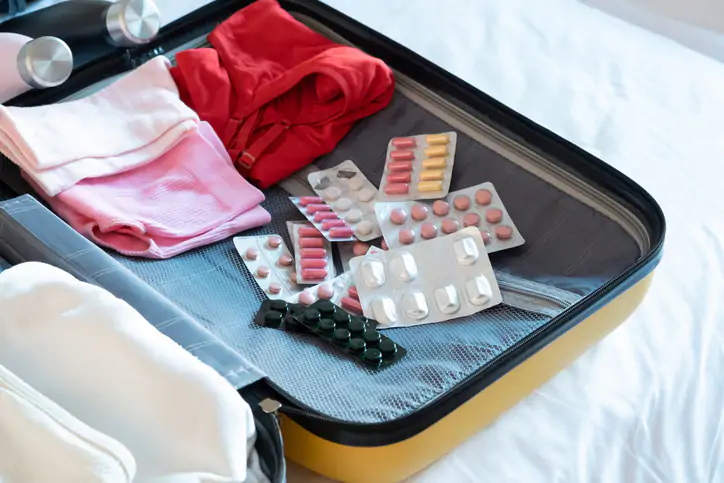
Travelling overseas is exciting, but if you rely on prescription medication, it adds an extra layer of planning that shouldn’t be left to the last minute. Different countries have different rules around medications, airport security can be confusing, and losing or running out of medication while overseas can quickly turn a dream trip into a stressful situation. With the right preparation, however, travelling with prescription medication can be straightforward and safe.
This guide covers what documents you may need, what to check before you leave Australia, how to carry medication through airports and security, what to do if you lose or run out of medication overseas, and how travel insurance can help if something goes wrong.
Understanding medication rules before you travel
One of the most important steps when travelling with prescription medication is checking whether your medication is legal in the country you are visiting. Some medicines that are commonly prescribed in Australia may be restricted or even illegal overseas, particularly medications that contain strong painkillers, stimulants, sedatives, or certain hormones.
Before you travel, research the medication rules for your destination country. A reliable starting point is the Australian Government’s Smartraveller website, which provides country-specific advice and health considerations for Australians travelling overseas. You can also check the destination country’s embassy or consulate website for the most accurate and up-to-date medication regulations.
If your medication is restricted, you may still be allowed to bring it with you, but only with the correct documentation and within strict quantity limits. Never assume that because a medication is legal in Australia, it will be automatically accepted overseas.
Documents and evidence you may need
Carrying the right paperwork is just as important as packing the medication itself. At minimum, you should bring:
• Your medication in its original pharmacy packaging with your name clearly printed on the label
• A copy of your prescription
• A letter from your GP or specialist explaining what the medication is, why you need it, and the dosage
A doctor’s letter is especially important if you are travelling with injectable medication, liquid medication over standard carry-on limits, or medications classified as controlled substances. Ideally, the letter should be written on clinic letterhead and include the doctor’s contact details.
For some countries, documents may need to be translated into the local language. While this is not always mandatory, having a translated version can make customs checks smoother and reduce misunderstandings.
It’s also wise to keep digital copies of all documents stored securely on your phone or in cloud storage, in case the originals are lost.
How much medication can you take overseas?
In most cases, travellers are allowed to take enough prescription medication for personal use, usually between one and three months’ supply. However, the permitted quantity varies by country and by medication type.
If you are travelling for an extended period, speak to your GP well in advance. In Australia, doctors can sometimes provide an advance prescription or authority script for a larger supply if there is a genuine need. This is not guaranteed and depends on the medication, but it’s worth discussing early so you have time to organise approvals if required.
It’s also important to check whether your medication needs special storage, such as refrigeration. Long-haul flights, hot climates, and extended travel days can affect medication stability, so ask your pharmacist about appropriate storage solutions before you leave.
Packing medication safely
Medication should always be packed in your carry-on luggage, not in checked baggage. Checked bags can be delayed, lost, or exposed to extreme temperatures, which may damage your medication or leave you without access for days.
If you are carrying more than one medication, organise them in a way that makes security checks easy. Keep all medication together with your documentation, so you can quickly explain what you’re carrying if asked.
If you use medical devices such as insulin pens, inhalers, EpiPens, or syringes, ensure they are clearly labelled and supported by a doctor’s letter. These items are generally allowed through security, but documentation helps prevent delays.
Going through airport security with medication
Airport security rules can be a source of anxiety for travellers carrying medication, particularly liquids or injectables. In Australia, liquid medications are allowed in carry-on luggage even if they exceed the usual 100ml limit, as long as they are medically necessary.
When passing through security, declare your medication to officers and present your supporting documentation if requested. Liquid medications may be screened separately, and you may be asked to open containers for inspection.
If you are transiting through multiple countries, be aware that security rules may differ at each airport. Allow extra time for security screening, particularly if you are travelling with complex medical needs.
Bringing medication back into Australia
When returning to Australia, prescription medication for personal use is generally allowed, provided it was prescribed to you and you are carrying reasonable quantities. The Therapeutic Goods Administration (TGA) outlines personal importation rules, which are useful to review if you plan to return with medication obtained overseas.
Australian Border Force officers may ask to see your prescription or doctor’s letter on arrival, especially if the medication is restricted. Declaring medication honestly on your incoming passenger card can help avoid issues and penalties.
What to do if you lose or run out of medication overseas
Despite careful planning, medication can be lost, stolen, damaged, or run out sooner than expected. If this happens, act quickly.
First, contact a local pharmacy to see if your medication or an equivalent is available. In some countries, medications that require prescriptions in Australia may be available over the counter, while others may be harder to obtain.
If a prescription is required, you may need to see a local doctor. Having a copy of your original prescription and doctor’s letter can make this process faster and reduce the risk of being prescribed the wrong medication or dosage.
If your medication is controlled or unavailable locally, contact the nearest Australian embassy or consulate for guidance. While they cannot supply medication, they can often help you navigate local healthcare systems or identify reputable medical providers.
How travel insurance can help
Travel insurance plays a vital role when travelling with prescription medication. If your medication is lost or stolen, a comprehensive policy may help cover the cost of replacement medication, subject to policy terms and limits.
More importantly, travel insurance can assist if you need medical treatment overseas due to a missed dose, adverse reaction, or deterioration of a pre-existing condition. This can include covering doctor visits, hospital care, and emergency assistance services that help coordinate treatment in unfamiliar healthcare systems.
Some policies also provide support if you need help locating medical facilities, arranging translation services, or coordinating care with your doctor back in Australia.
Before travelling, it’s important to disclose any pre-existing medical conditions when purchasing your policy. This ensures you understand what is covered and avoids complications if you need to make a claim later.
Before you travel, consider getting a quote and reviewing your cover options with Go Insurance Australia. You can get a free quote directly through the Go Insurance Australia homepage and choose a policy that suits your destination, length of travel, and medical needs.
Final checks before you go
Before departing, run through a final checklist:
• Confirm your medication is legal in your destination country
• Ensure you have enough medication for your entire trip, plus a small buffer
• Pack medication in original packaging in your carry-on luggage
• Carry copies of prescriptions and a doctor’s letter
• Check storage requirements for your medication
• Review your travel insurance policy and emergency assistance details
Travelling with prescription medication doesn’t have to be stressful, but it does require preparation. With the right research, documentation, and insurance cover, you can focus on enjoying your trip knowing you’re well prepared if anything unexpected happens.